
Command Central for Fire Department
Product Designer
2025
Solo Project
UX Research
Product Design
Field Studies
Overview
Digital transformation for emergency response
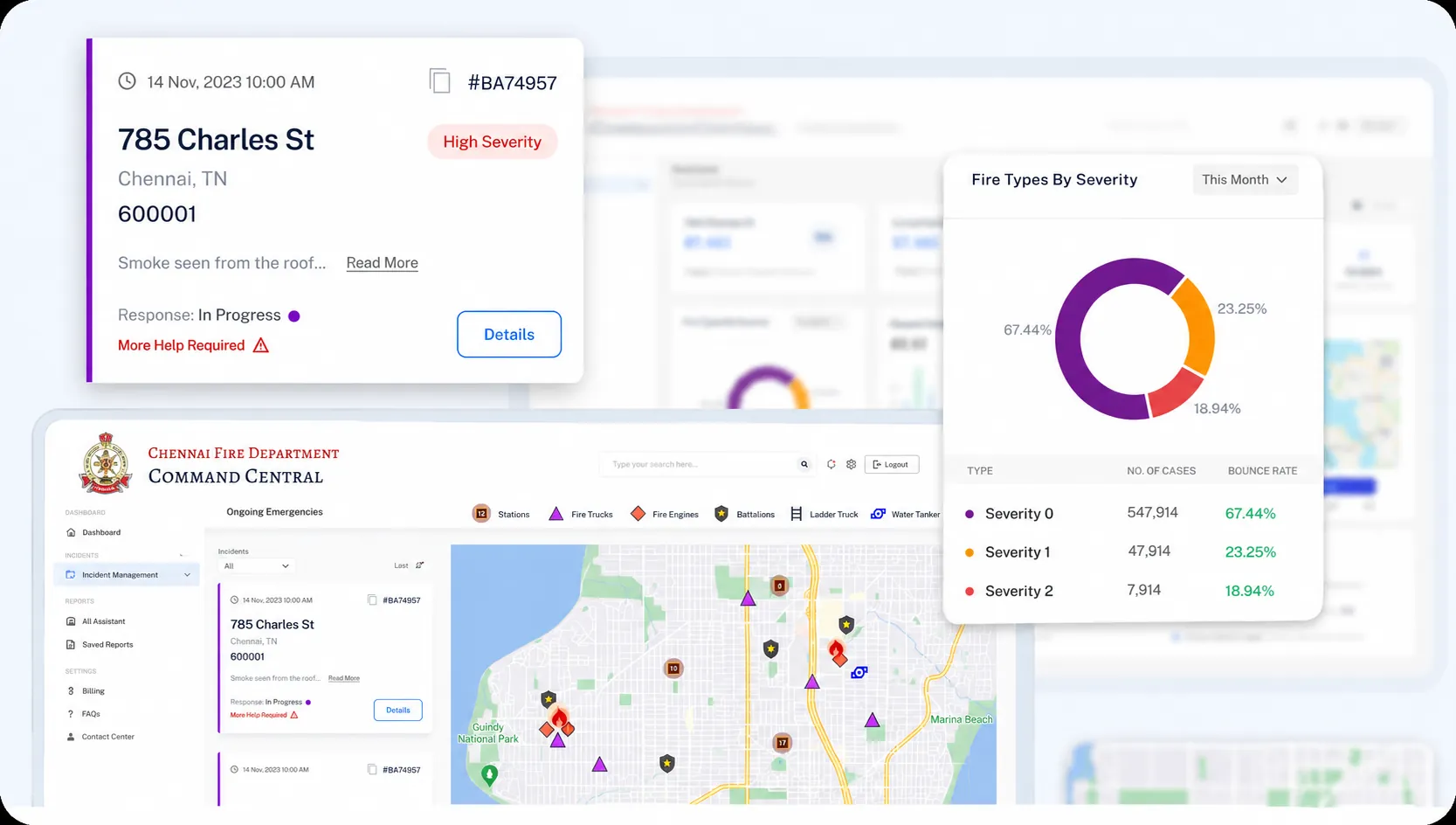
Command Central is a conceptual application I pitched to the Chennai Fire Department, aimed at digitally transforming their emergency response operations. The project focused on improving resource allocation, incident management, and data-driven planning through a human-centered design approach.
Problem
Manual workflows limiting emergency response efficiency
The Chennai Fire Department operates in high-pressure environments where time, communication, and coordination are critical. Much of their current system relies on manual reporting, paper-based workflows, and fragmented data management, which makes it difficult to access real-time updates and analyze performance trends.
The challenge was to design a platform that could streamline information flow, enhance visibility, and empower coordinators to make faster, more informed decisions during emergencies.
Research
Field studies at Chennai Fire Department
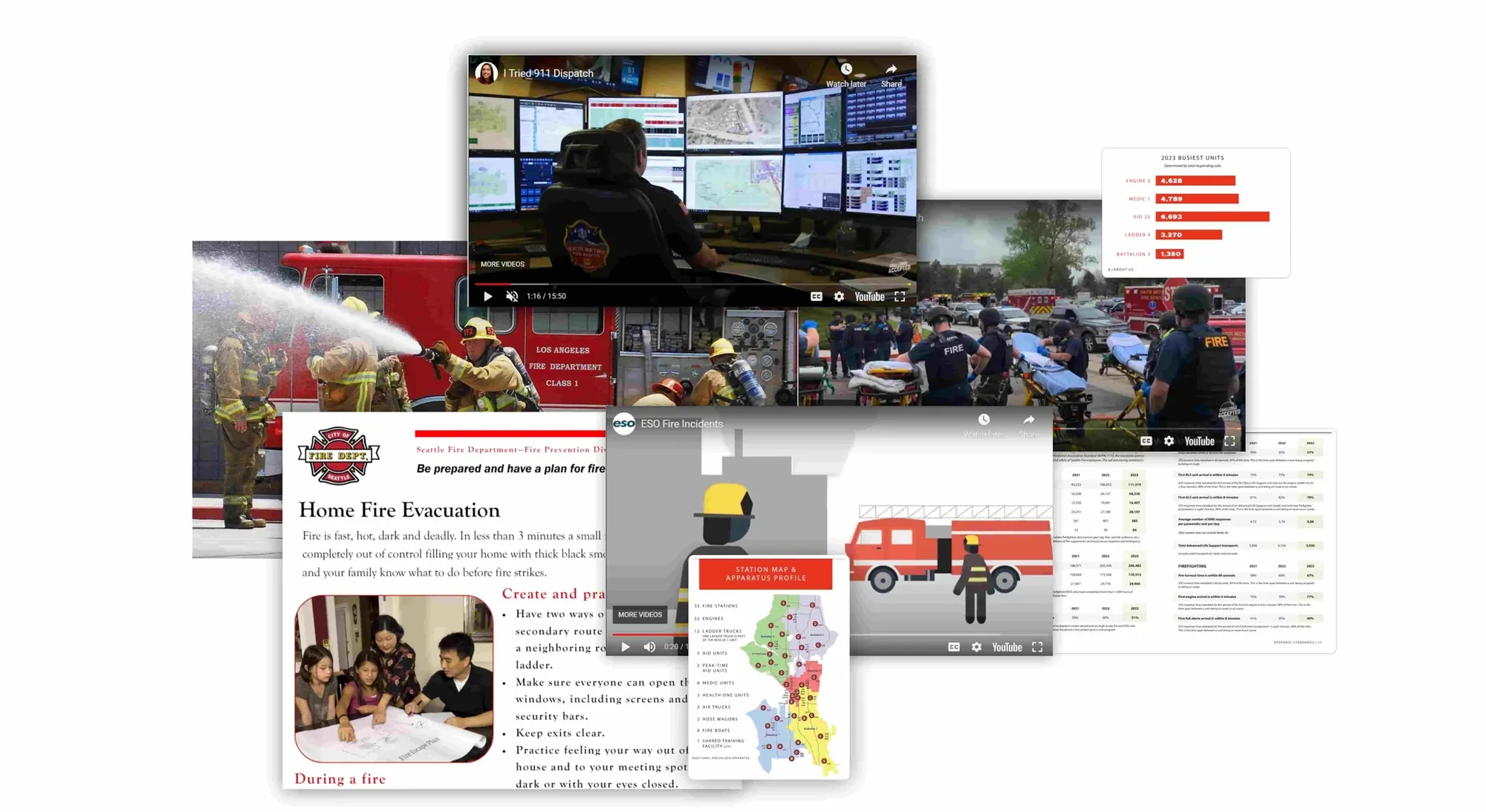
To understand the system deeply, I conducted UX field studies by visiting the Chennai Fire Department. I observed daily workflows, spoke with officers, and gathered insights from control room staff and rescue teams.
This contextual inquiry helped uncover critical pain points:
- Difficulty tracking real-time resource availability
- Limited digital infrastructure for reporting and analysis
- Heavy dependence on verbal/radio communication
- Lack of a centralized platform for coordination across teams
Building on top of the existing system, I identified opportunities for digitization, accessibility, and operational efficiency.
Solution
Command Central
Command Central was designed as a web-based command portal that enables coordinators to manage incidents, allocate resources, and analyze data seamlessly.
Key Features
- Incident Management Dashboard: Combines list and map views for live incident tracking and resource status.
- Resource Allocation: Assign vehicles, personnel, and equipment in real-time with visual indicators for availability.
- AI-Powered Reports: Automatically generate structured incident summaries and post-operation insights.
- Analytics Dashboard: Visualize key metrics, historical data, and geographic patterns for smarter resource planning.
Key Considerations
How do we enable the Chennai Fire Department to achieve their goals?
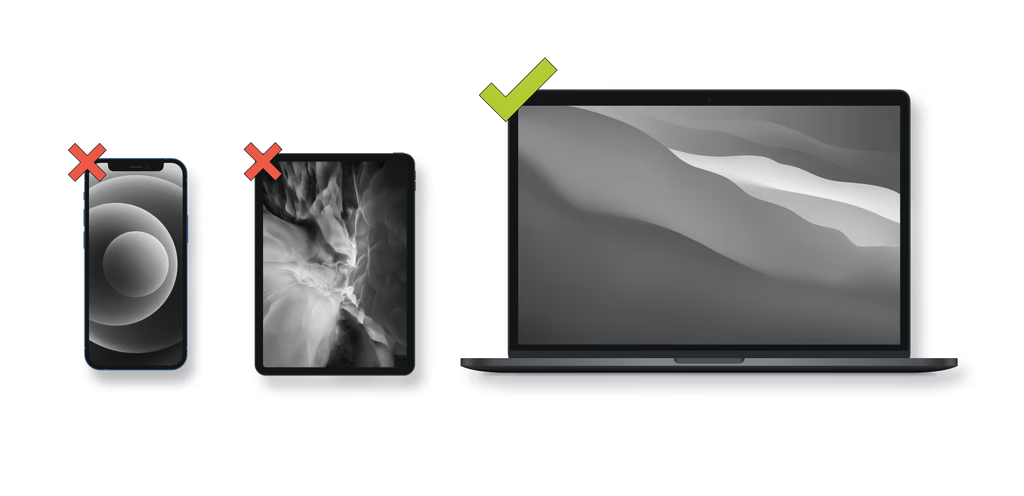
We decided to design a web portal because there are a lot of information points involved and the coordinator requires to consume that information and navigate between different pages as quickly as possible.
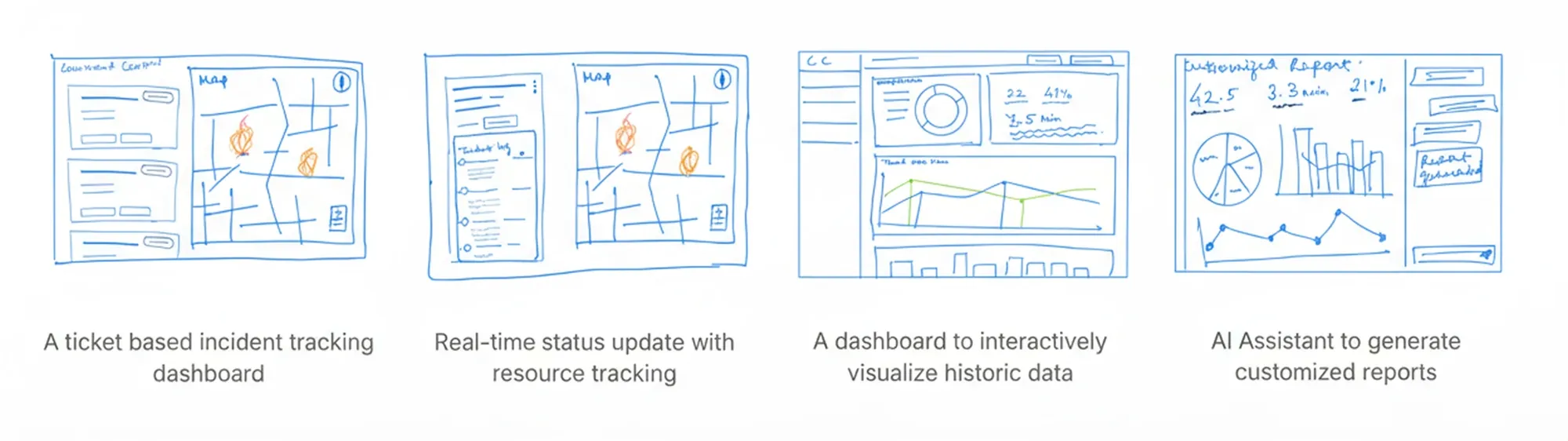
2. Secondly, we created a mind map that helped us identify key elements in each of the flows that would support jobs-to-be-done.
3. Once we were clear what we are designing, we divided up the work. I picked up the incident management workflow and the data dashboard.
Design Decisions
Accessible colors?
The selected colors are color-blind friendly for category classification and meet AA contrast requirements according to WCAG 2.2.
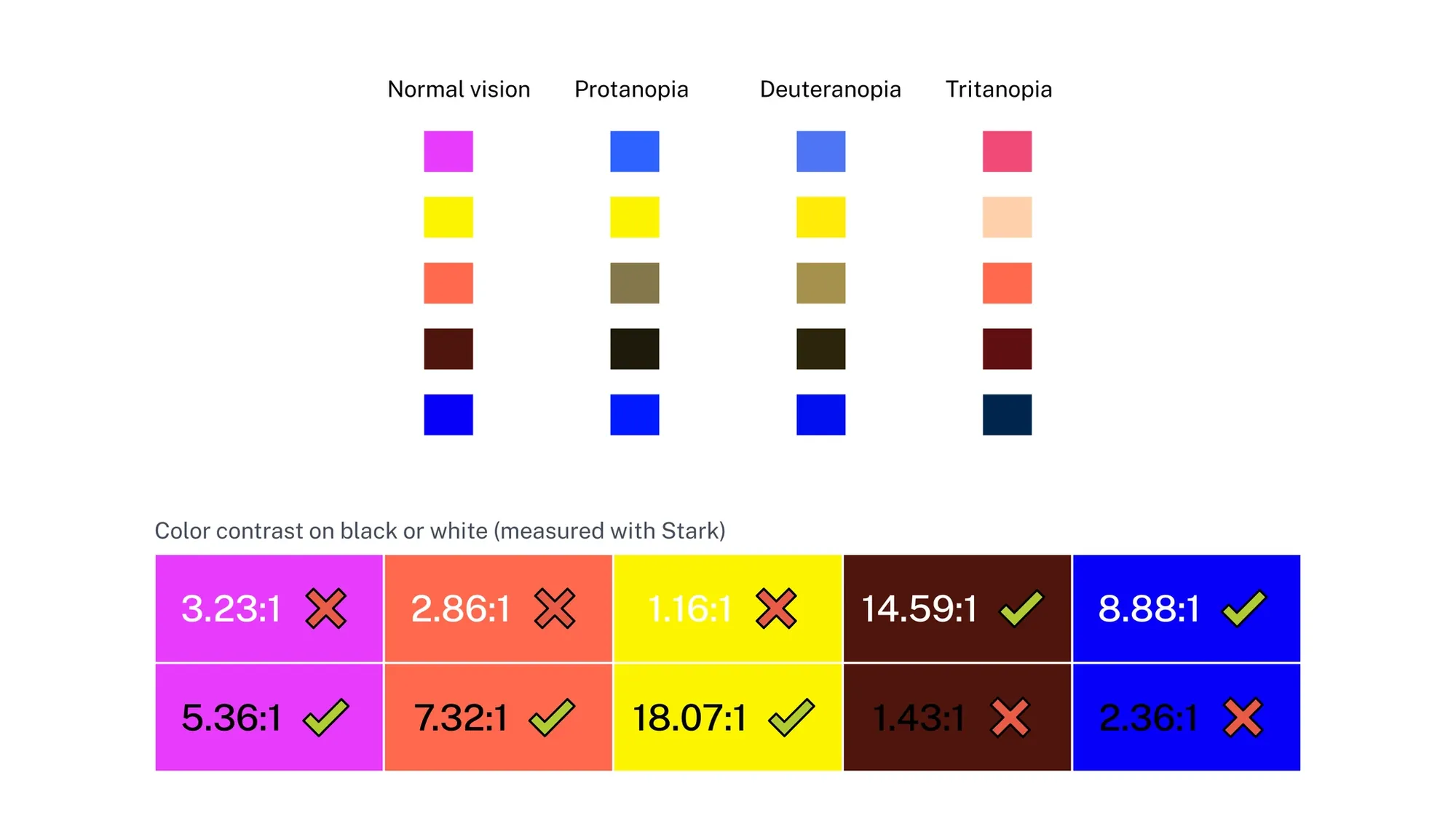
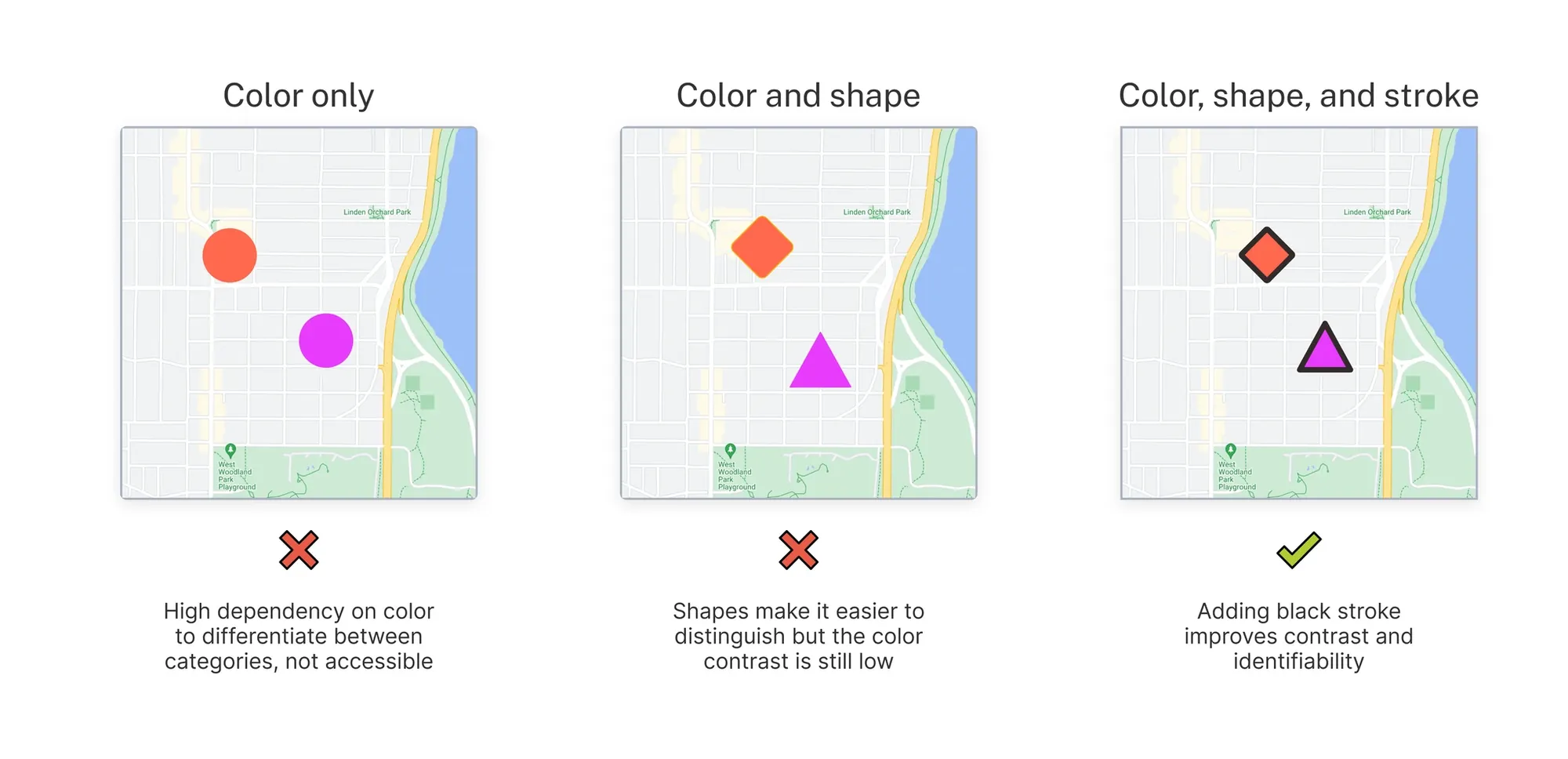
Icon design ensured accessibility by removing exclusive dependency on color and ensuring enough contrast
The different shapes helped in categorization along with colors. Addition of dark stroke ensured sufficient contrast with map background.
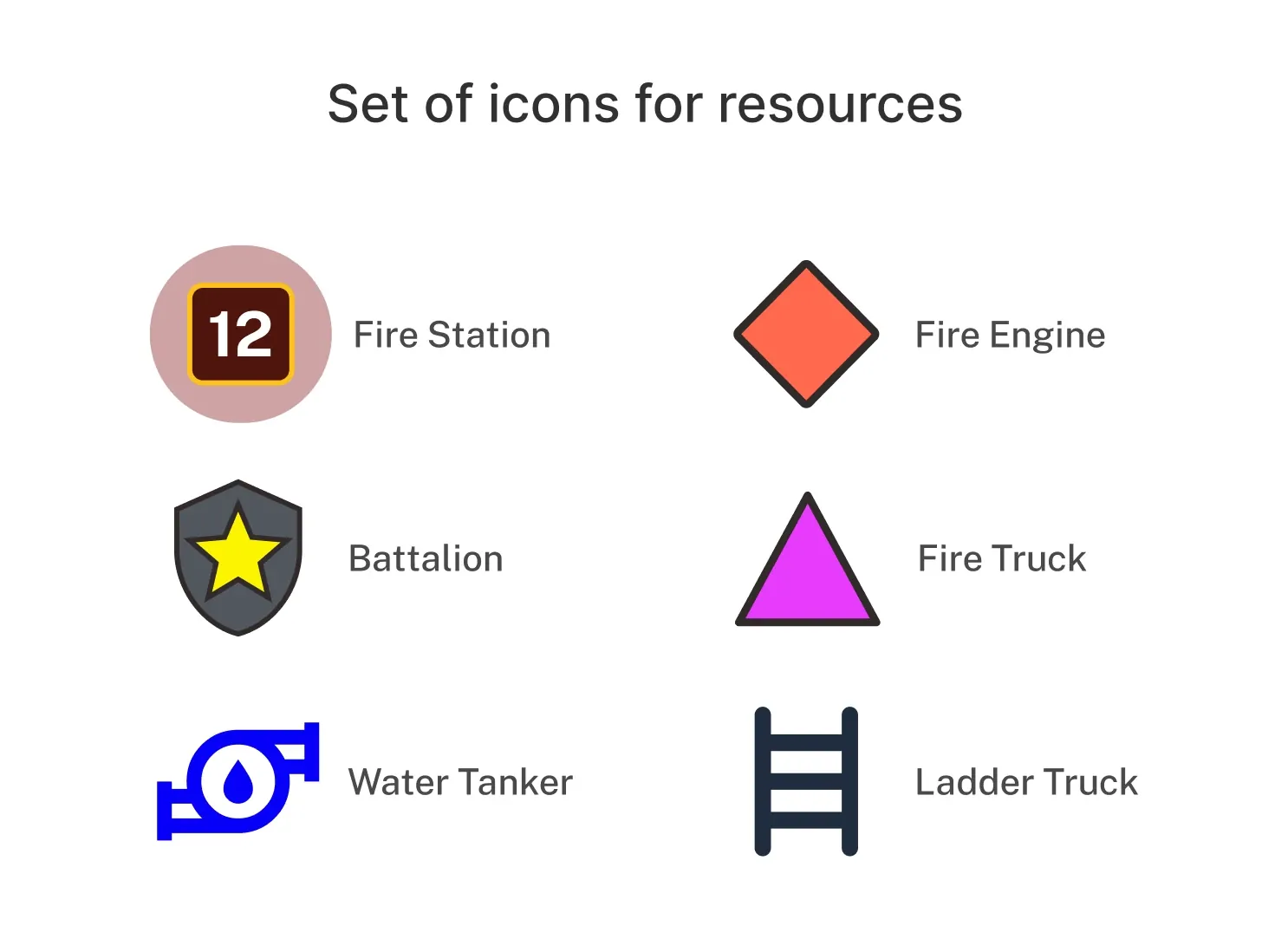
Icons for various resources used by the Fire Department during an emergency response.
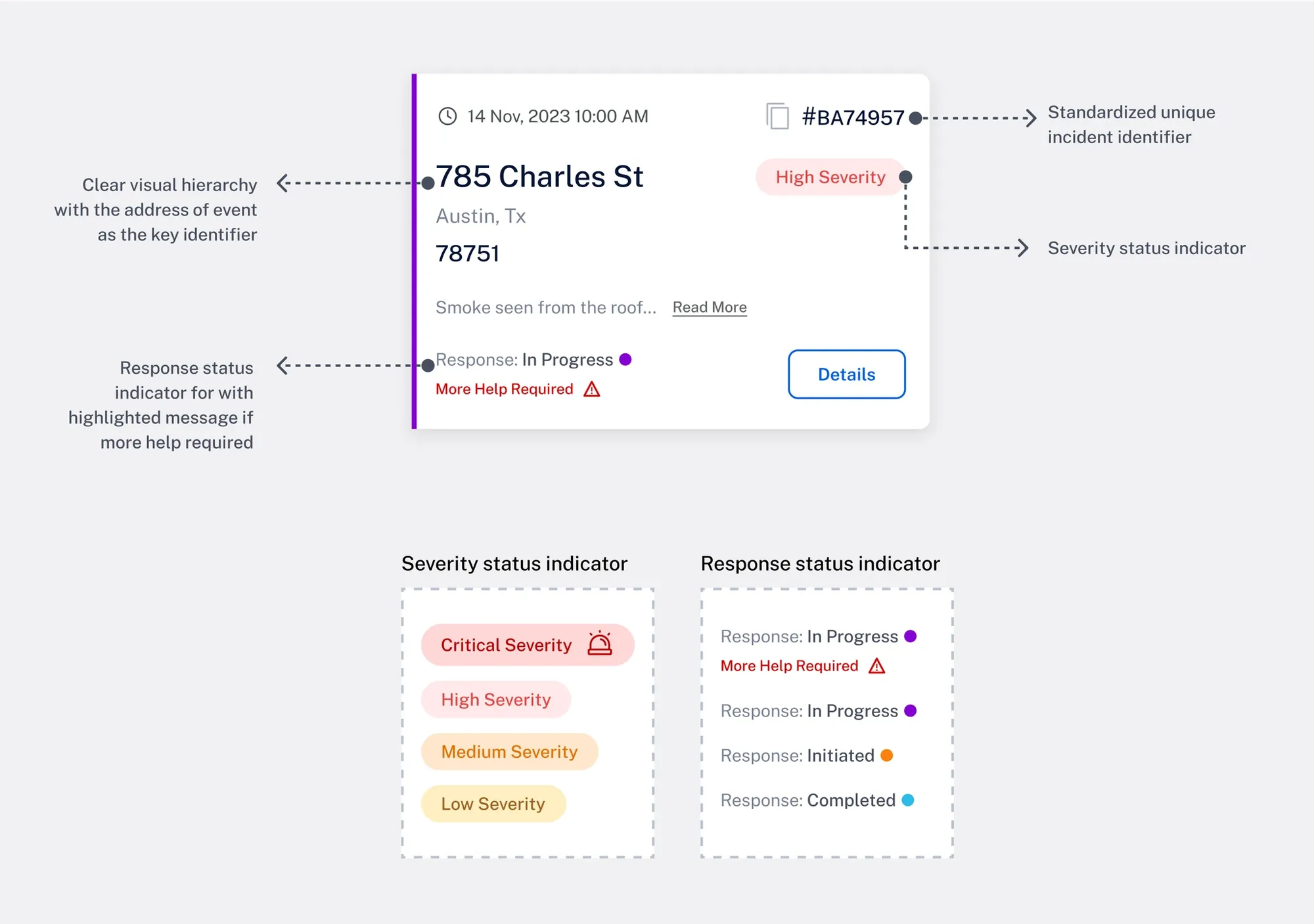
Designing incident ticket for emergencies
The layout highlights clear hierarchy of information with visual weight.
High-Fidelity Mockups
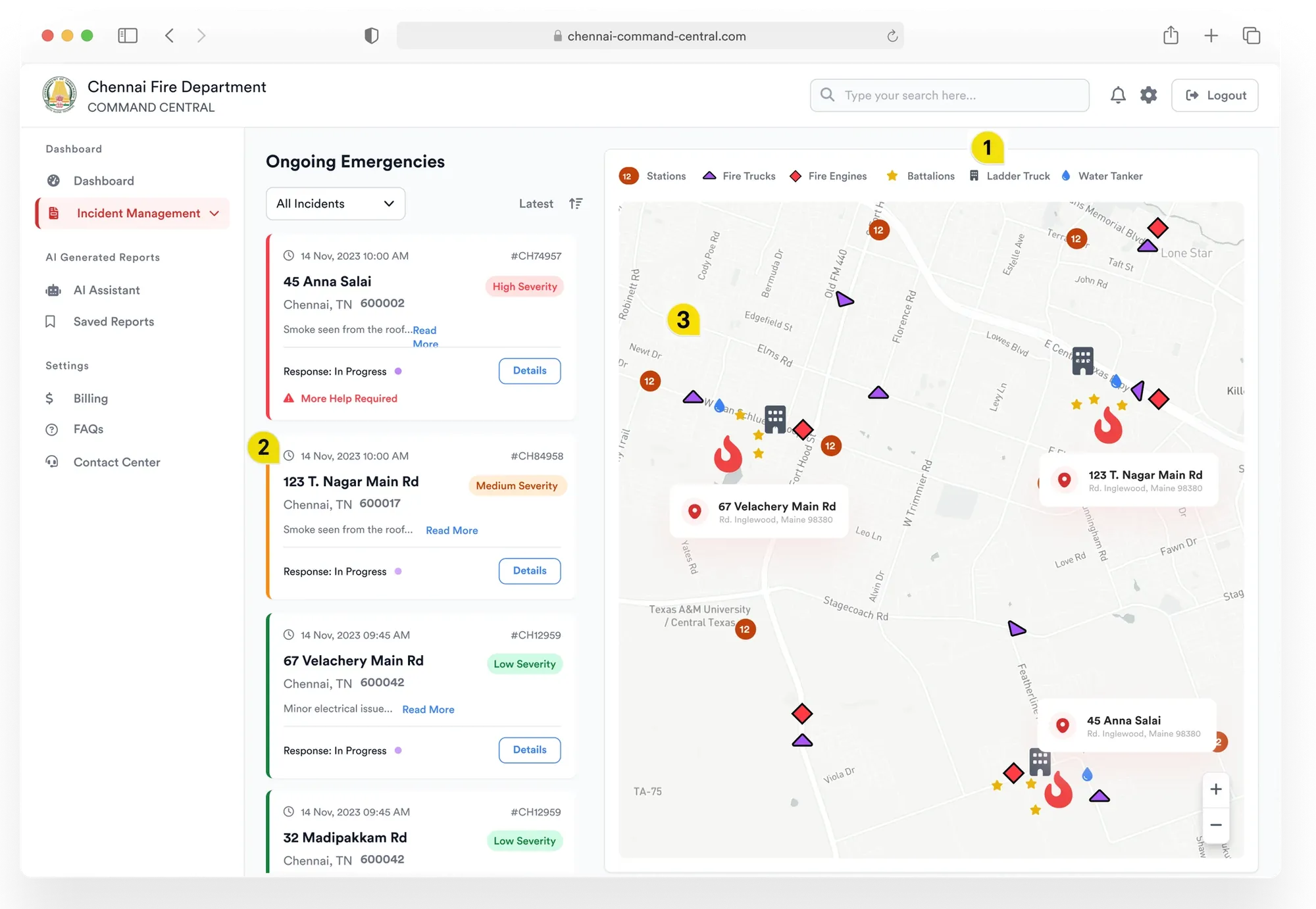
A ticket-based incident management portal
The combination of list and map view gives crucial information about incident details and real time location on the map.
- Assigned easily differentiable icons and accessible colors to the resources.
- All active response tickets indicating the status of response and severity of incident.
- Map view makes it easy to glance where your resources are located in real time.
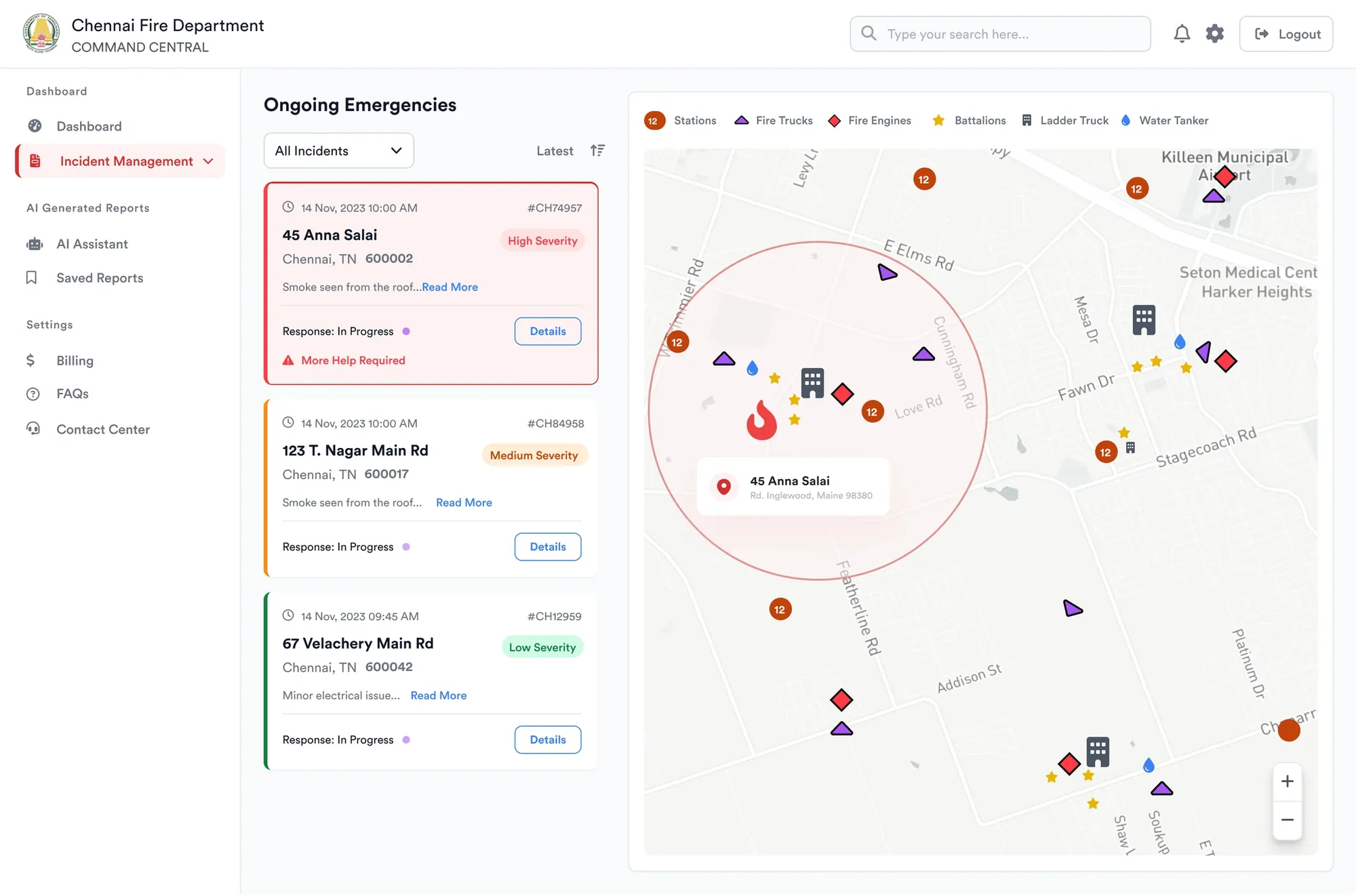
Incident specific and resource specific views
The viewer can choose to select if they want to restrict the map display to a particular incident or resource.
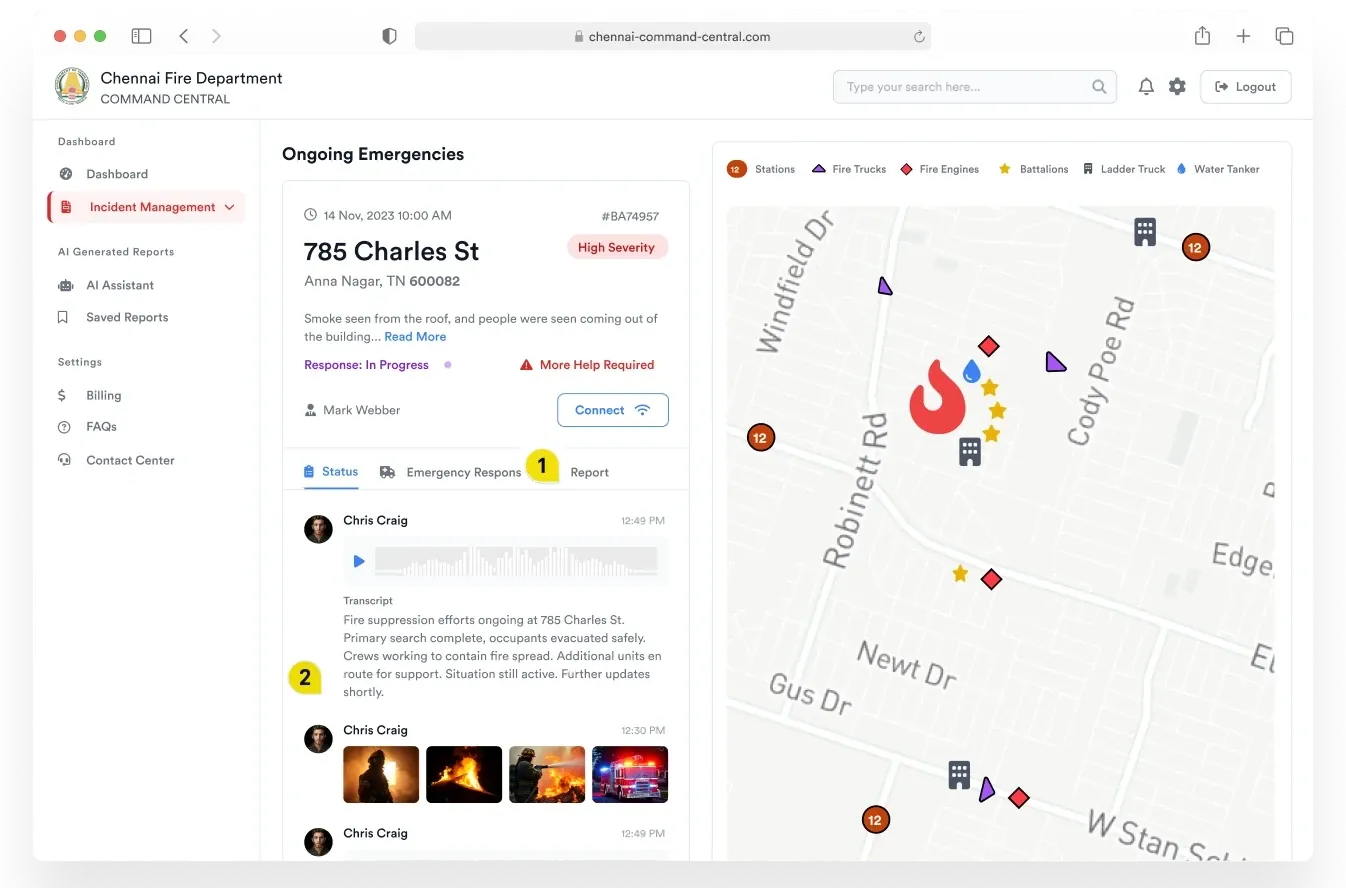
Incident Details page
The user can get a zoomed in view of the incident and the details on this page. They can also assign resources and generate report using AI.
- The response coordinator can check status updates received from the ground, manage resources and generate report.
- All the status updates during the rescue operation will be logged in the form of voice notes received from radio along with automatically transcribed text as well as shared images.
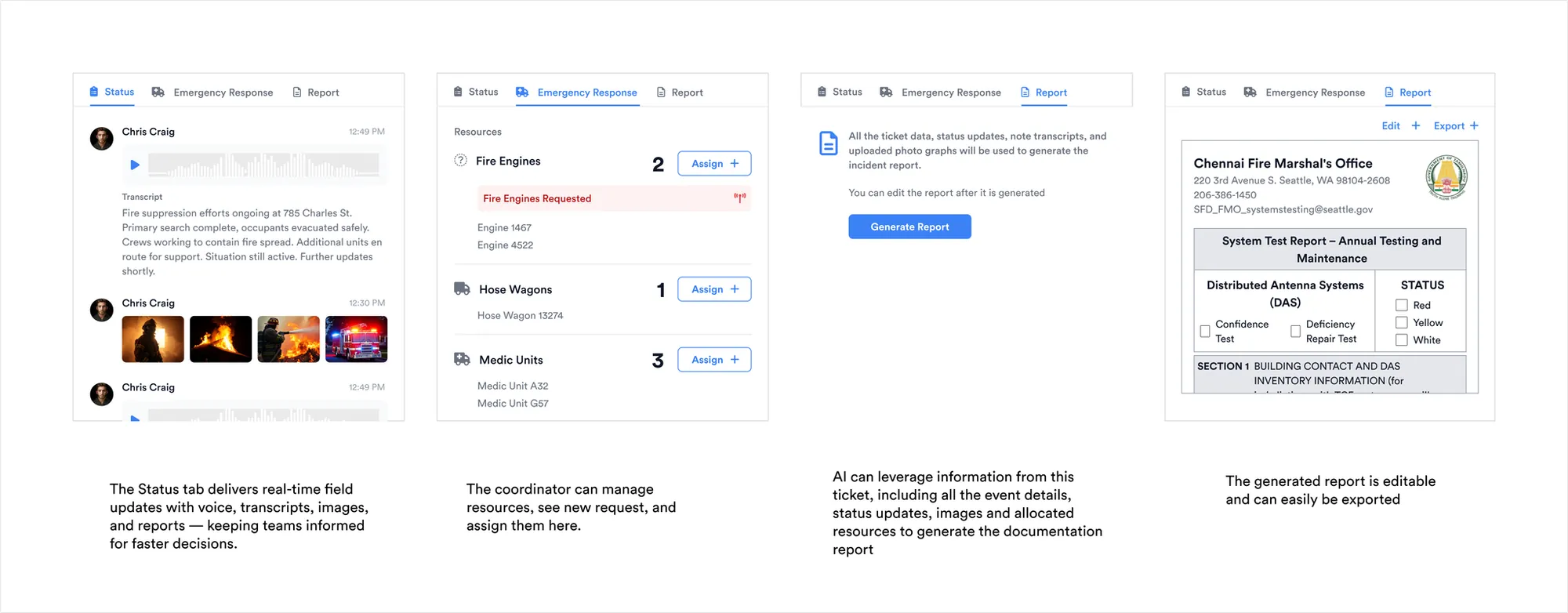
Ability to manage resources during the emergency and generate even report with AI
The user can get a zoomed in view and incident details on this page. They can also assign resources and generate report using AI
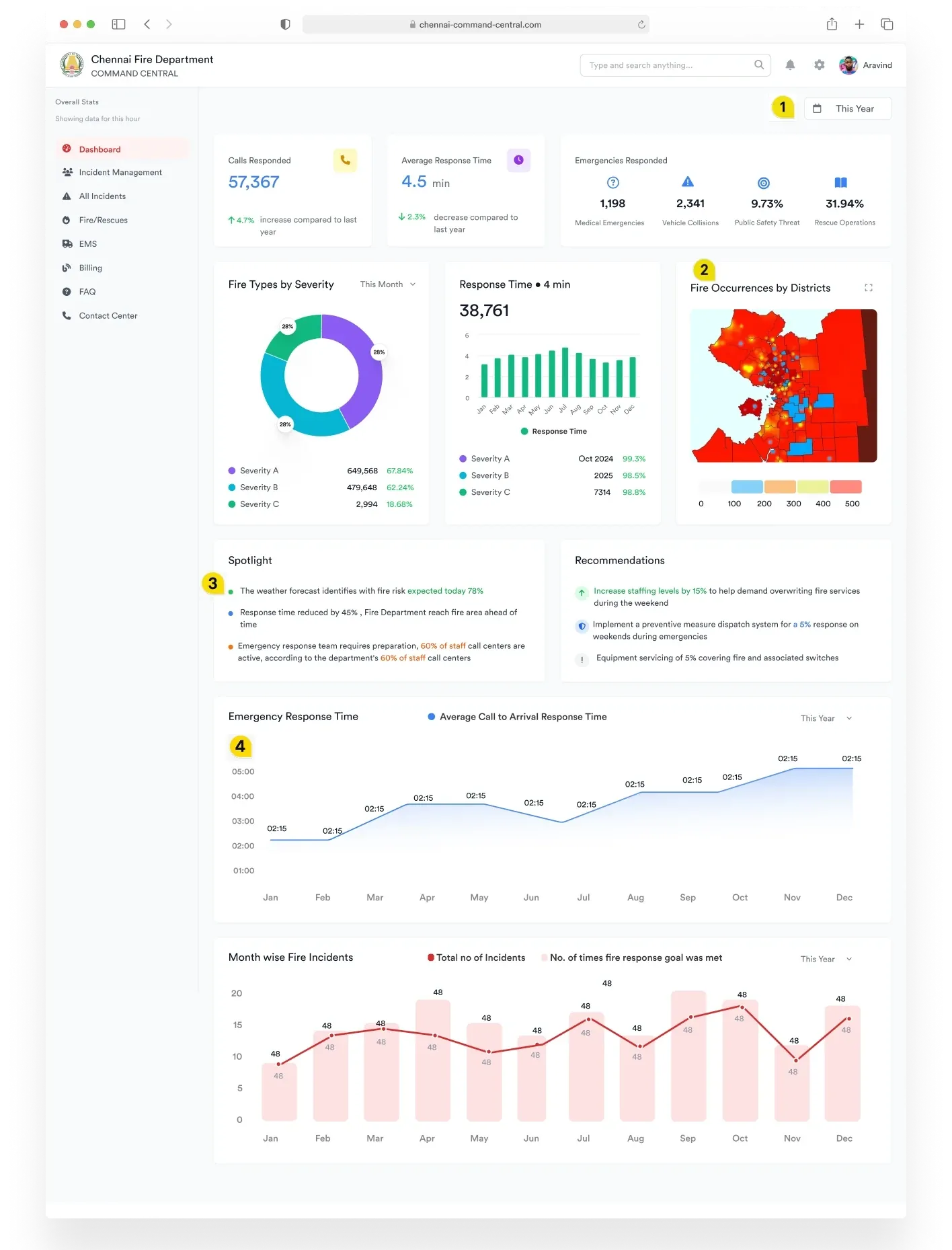
Analytics Dashboard
Analytics dashboard to view past data
The user can view key metrics, geographic distribution, and trend over time in a customized time frame.
- Key Metrics are visible right up front. Users can view data in customizable time frames.
- Viewers have ability to look at geographic distribution of events and strategize which areas need more resources going forward.
- AI-generated insights and recommendations to help in long term resource planning.
- Users can look at trend over time to understand year-on-year changes or seasonality patterns in resource demands.
Impact
Streamlining emergency operations
Command Central streamlines emergency management by integrating incident tracking, resource visibility, and data analytics into a single platform.
The design empowers coordinators to:
- Make quicker, data-informed decisions
- Improve collaboration between field and control teams
- Plan future resource strategies based on insights
Limitations
This project offers a simplified view but the actual operation of a fire department is so much more complicated
While the concept simplifies the process, actual fire department operations are far more complex. Real systems involve inter-departmental coordination, diverse emergency types, and protocol-based responses that require gradual digital transformation.
Learnings
This project was a transformative experience that deepened my appreciation for the impact of UX in real-world, mission-critical contexts
Conducting field research and pitching a tangible solution to the Chennai Fire Department taught me the value of empathy-driven design, rapid problem framing, and communicating design intent to non-design stakeholders.
Command Central reaffirmed my belief that design can be a force for operational excellence and public service innovation.